
MHRA Inspection Findings: Archiving and Data Retention for Clinical Trials
If you’ve been involved in an MHRA inspection over the last year, much of this will probably feel familiar.
Our earlier review of MHRA inspection findings from 2016–2023 showed gaps in clinical trial archiving, TMF oversight, retention policies, and access control. Despite years of regulatory focus, archiving was often treated as a downstream activity, with organisations relying on live systems, informal retention decisions, and divided ownership of trial records.
Recent MHRA inspection findings released under a Freedom of Information request show that these same issues are still being cited today. We reviewed inspection findings from the last 12 months where observations related specifically to the availability, archiving, and retention of trial data. In that period, 12 inspection events included archiving-related findings, many with multiple observations.
It is also worth noting that these findings pre-date the new UK Clinical Trials Regulations, which introduce more stringent expectations around data retention, accessibility, and long-term oversight. If these gaps are appearing now, organisations that do not address them risk facing even greater scrutiny once the new regulatory framework comes into force in April 2026.
Across nine organisations, the same patterns kept emerging. Seven organisations had gaps in electronic archiving, four lacked documented retention policies, and three struggled with TMF scope, named archivist responsibilities, or access control.
Common Archiving Gaps in Clinical Trials
Electronic archiving was the most common area of concern.
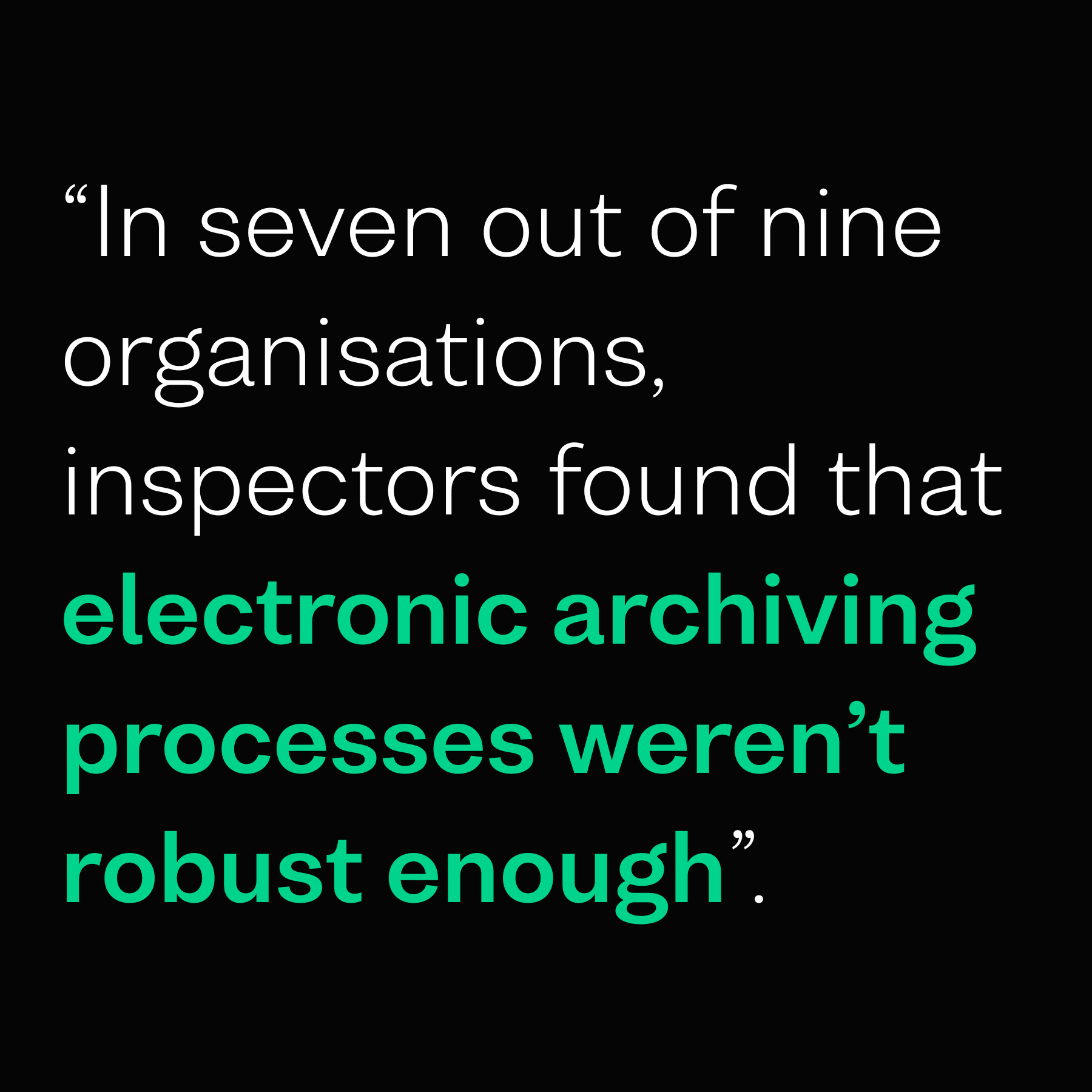
In seven out of nine organisations, inspectors found that electronic archiving processes weren’t robust enough. In practice, this often-meant trial databases were left “live” with read-only access because there was no mechanism for true long-term archiving.
 Even more concerning, there were no safeguards in place to ensure archived files would remain readable for the full retention period raising the very real risk of data loss when systems are retired.
Good preservation practice ensures archived data remains accessible, readable, and intact for the full retention period. This can include the use of long-term preservation copies designed to remain usable even as systems and formats change.
Arkivum explores the critical differences between live systems and preservation systems in our blog Preservation Versus.
TMF Oversight and Management Gaps in Clinical Trials
The Trial Master File (TMF) is central to GCP compliance, yet three organisations had no clear process for defining all TMF components, including those held by third parties. This potentially leads to TMF data sprawl, where essential records are distributed across multiple systems and service providers without a single, controlled view.
Without a complete TMF structure, inspection readiness and end-of-trial archiving becomes guesswork. Inspectors are increasingly unwilling to overlook these gaps, particularly when they sit alongside broader weaknesses in archiving governance.
Retention Policy Gaps in Clinical Trials
In four cases, retention policies were missing altogether. SOPs and QMS documents didn’t clearly state how long TMFs, training logs, or QA documentation should be retained.
In some inspections, retention was described as being set “per trial”, but this wasn’t documented. That’s a compliance risk waiting to happen. Without clear retention rules, records can be destroyed too early or kept indefinitely both of which carry regulatory and operational consequences.
Access Control and Data Confidentiality Risks in Clinical Trials
Access control weaknesses were identified in three organisations.
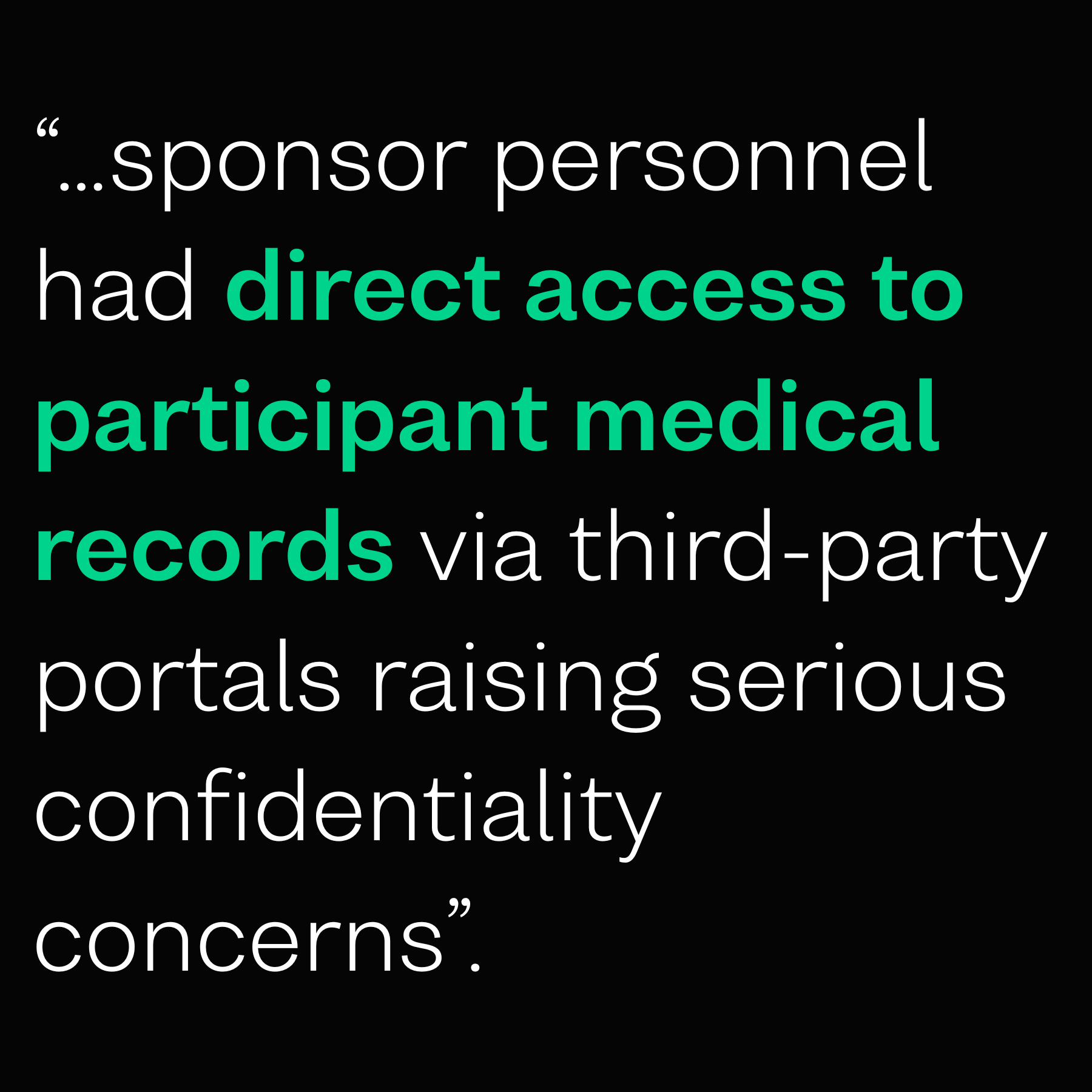
In one case, archive retrieval lists still included eight members of staff who had left the organisation. In another case, sponsor personnel had direct access to participant medical records via third-party portals raising serious confidentiality concerns.
In today’s data privacy and regulatory environment, these lapses do more than generate inspection findings. They increase legal, regulatory, and reputational risk, particularly when combined with broader governance gaps such as unclear data ownership, weak vendor oversight, or poorly defined retention responsibilities. These examples highlight that compliant retention depends on sustained operational controls, regular access reviews, and clear accountability throughout the full duration of the retention period, not just at the point records are archived.
Investigator Site Challenges in Clinical Trials
Investigator sites faced their own set of challenges.

Two organisations lacked robust processes for flagging medical records for long-term retention, particularly during transitions to electronic health record systems. At one investigator site, SOPs failed to define how paper records should be marked for retention, and the ad hoc use of yellow stickers was inconsistent, only three of five participant files were flagged. This gap becomes critical during migration to electronic systems, where retention markers risk being lost if scanning workflows are not controlled. Similarly, a Phase 1 unit introduced an electronic repository for scanned volunteer records but lacked formal procedures for user access, certification of scanned copies, and reconciliation of records. Inspectorsnoted that some records were missing during review.
These site-level gaps often surfaced alongside sponsor-level findings, highlighting how interconnected record management really is.
Scanning, Portal Workflows, and Major Compliance Findings
One organisation involved in a Phase I study received a major compliance finding due to inadequate control over outsourced scanning. Effectively, scanned records were not certified as true copies, and approximately 70% of documents were scanned in black and white. This practice introduces a significant risk of losing critical colour-dependent information, particularly in cases where colour scales are relevant. In MHRA terms: this is a GCP inspection finding for TMF/data integrity failure due to inadequate oversight of outsourced document management.
Bottom Line: MHRA Insights for Archiving in Clinical Trials
The inspection findings make it clear that archiving and retention failures are a systemic governance problem rather than a series of isolated administrative errors. Organisations repeatedly treat archiving as a downstream, “close-out” activity, leave trial systems live without a preservation strategy, spread TMF ownership across vendors and sites, and fail to enforce basic vendor controls and access reviews, a combination that creates unclear accountability and predictable inspection findings.
The recent FOI-revealed MHRA inspection outcomes confirm that these weaknesses persist despite prior regulatory attention. In short, it is not simply vendor oversight or poor scanning in isolation but a broader failure to manage records as regulated assets across their entire retention period; addressing it requires organisational change, technical investment, and continuous assurance, not just better SOPs at study close-out.
These weaknesses matter because the regulatory bar is rising. The updated UK clinical trials regulations increase minimum retention expectations and tighten requirements around data accessibility and oversight. This means sponsors who continue to rely on informal retention decisions, unmanaged live systems, or weak vendor contracts will face more serious scrutiny and remediation obligations when the new framework comes into force.

Anthony Wells
Anthony assumed the role of Product Marketing Manager at Arkivum in 2024, leveraging over a decade of experience of product marketing management in the technology sector. Proficient in developing and executing marketing strategies, Anthony is also experienced in product lifecycle management, from inception through to discontinuation.
Get in touch
Interested in finding out more? Click the link below to arrange a time with one of our experienced team members.
Book a demo