
ArkFest 2026: GxP Data Retention and Management Track Takeaways
This year’s ArkFest was our biggest and best yet, bringing together the digital archiving and preservation community for more than 30 presentation sessions across two inspiring days.
For this blog, I am focusing on the GxP Retention and Data Management track, where several clear themes stood out. A second article will look at sessions from the Digital Preservation Good Practice track, which includes Higher Education, cultural institutions, technology organisations and the broader information management community.

ArkFest Welcome from Arkivum’s CEO – Chris Sigley
1. We’re Moving from Document Management to Evidence Management
For years, the life sciences industry has focused on documents.
Have we collected them? Filed them? Archived them?
What came through clearly in the GxP track was a shift in thinking. The conversation is no longer just about documents. It is about evidence.
Donna Dorozinsky and Dawn Niccum illustrated this perfectly in their session on CDISC’s TMF Standard V1 and the ISF Reference Model V1. They explained how these new frameworks are designed to organise and preserve the evidence that demonstrates compliance and good practice, rather than simply acting as repositories for documents. The emphasis is on ensuring organisations can retain not only the content of records, but also the context needed to prove authenticity, traceability and regulatory compliance throughout the lifecycle of a clinical trial.
This shift from document-centric thinking to evidence-centric thinking was also reflected in presentations from Maria Veleva, Kateryna Oliinyk and Christoph Ortland.
We are moving from managing documents to managing evidence!
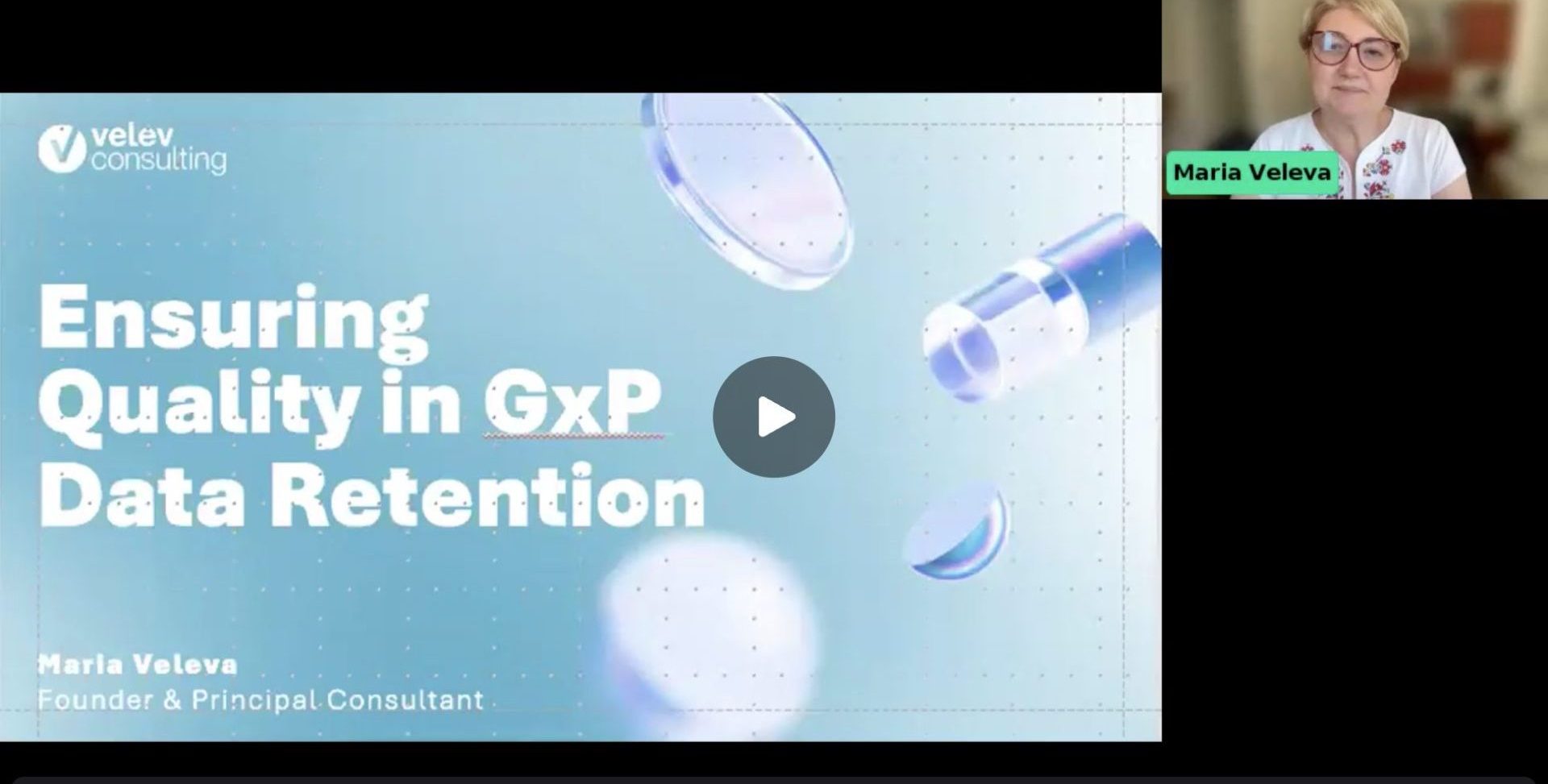
Ensuring Quality in GxP Data Retention – Maria Veleva, Velev Consulting
2. Quality by Design isBecoming the Foundation for Modern Clinical Development
If there was one theme that consistently surfaced throughout the GxP track, it was Quality by Design.
Kateryna Oliinyk’s session demonstrated how Quality by Design extends beyond study design into the way organisations identify, manage and retain the records that matter most. By focusing on critical-to-quality data and the information that demonstrates patient safety, regulatory compliance and study outcomes, organisations can build stronger foundations for inspection readiness while reducing unnecessary complexity.
This broader focus on embedding quality from the outset was also explored in presentations from Cornelia Baumgartner, Heather Armstrong and Stephen Crow.
Taken together, these sessions showed that Quality by Design is becoming far more than a regulatory expectation. It is increasingly becoming the operating model for successful clinical development.
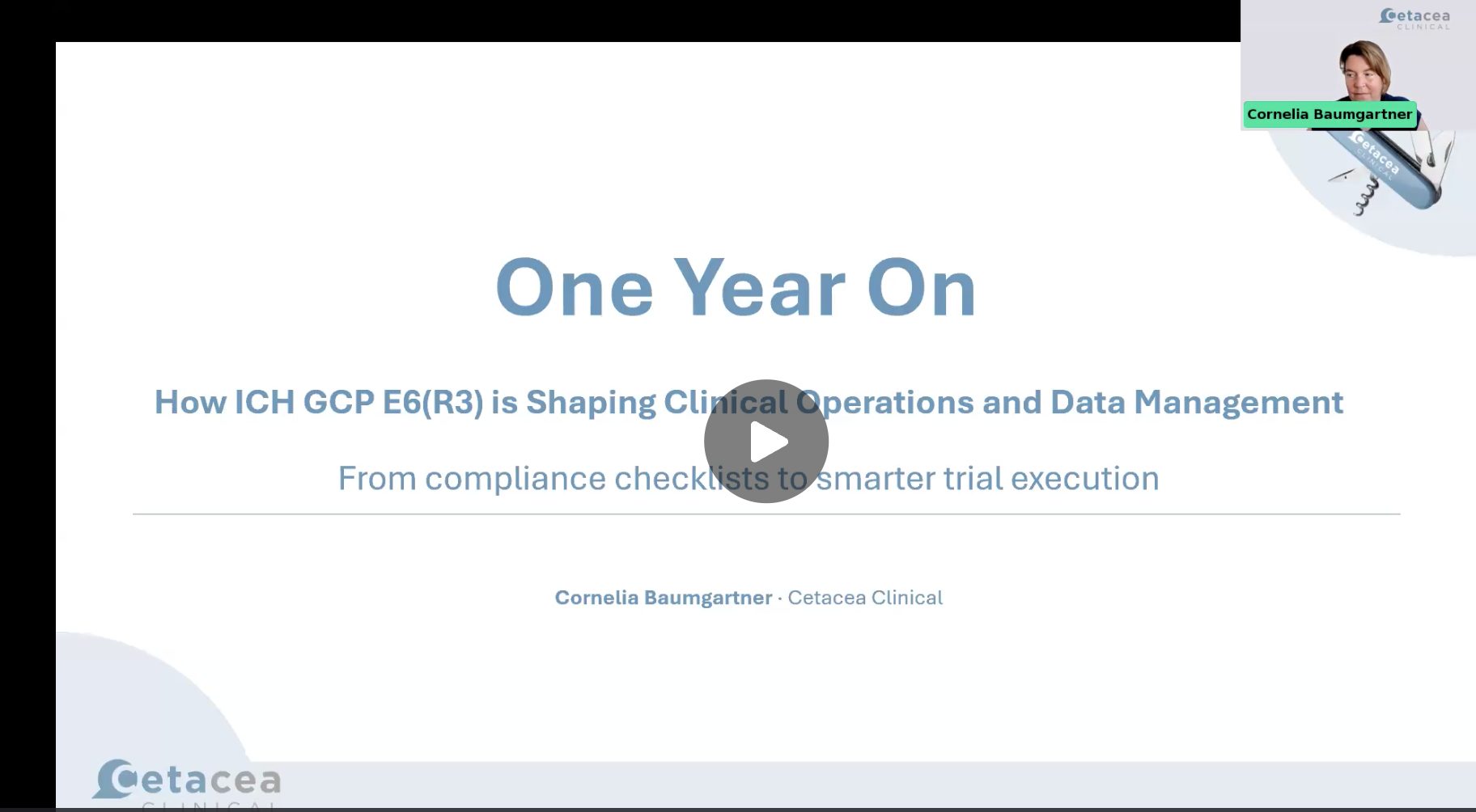
One Year On: How ICH E6(R3) is Shaping Clinical Operations and Data Management – Cornelia Baumgartner – Cetacea Clinical
3. Digital transformation is about people as much as technology
Technology continues to transform the life sciences industry, but one presentation in particular reminded me that successful transformation is never just about implementing new systems.
Maria Veleva’s session on Ensuring Quality in GxP Data Retention highlighted the importance of building robust processes, maintaining quality throughout the information lifecycle and ensuring organisations are prepared for the long term.
It reinforced a broader message that emerged across the conference: lasting transformation depends not only on technology, but on people, culture and a shared commitment to improving the way we manage and protect information.
Whether organisations are adopting new platforms, responding to regulatory change or modernising legacy processes, success ultimately comes from bringing people on the journey.
4. Data Lifecycle Management Is Expanding Beyond Archiving
A recurring theme across the GxP sessions was that data lifecycle management is becoming broader than traditional archiving and retention.
In What Warning Letters Are Already Telling You About Managing the Data Life Cycle, Lauren Alani examined how FDA warning letters continue to emphasise sponsor accountability for data throughout its lifecycle. While technology and operating models continue to evolve, organisations remain responsible for maintaining appropriate oversight and demonstrating data integrity.
This complemented Maria Veleva’s discussion of GxP data retention, reinforcing that long-term governance depends not only on retaining information, but also on ensuring it remains accessible, traceable and inspection-ready throughout the required retention period.
5. Trusted information is the foundation for innovation
Artificial intelligence and new technologies featured throughout ArkFest, but one message remained consistent: innovation depends on information that organisations can trust.
Ricky Lakhani’s session explored how breaking down information silos and enabling better data exchange can improve operational efficiency while making critical information more accessible, connected and reliable. His presentation demonstrated that organisations cannot fully benefit from emerging technologies unless they first have a strong foundation of well-managed, trusted information.
This message was also reinforced in Lauren Alani’s session, highlighting that organisations need to adopt new technologies responsibly.
As organisations continue investing in AI and increasingly connected digital ecosystems, trusted information will become one of the key enablers of innovation, resilience and better decision-making.
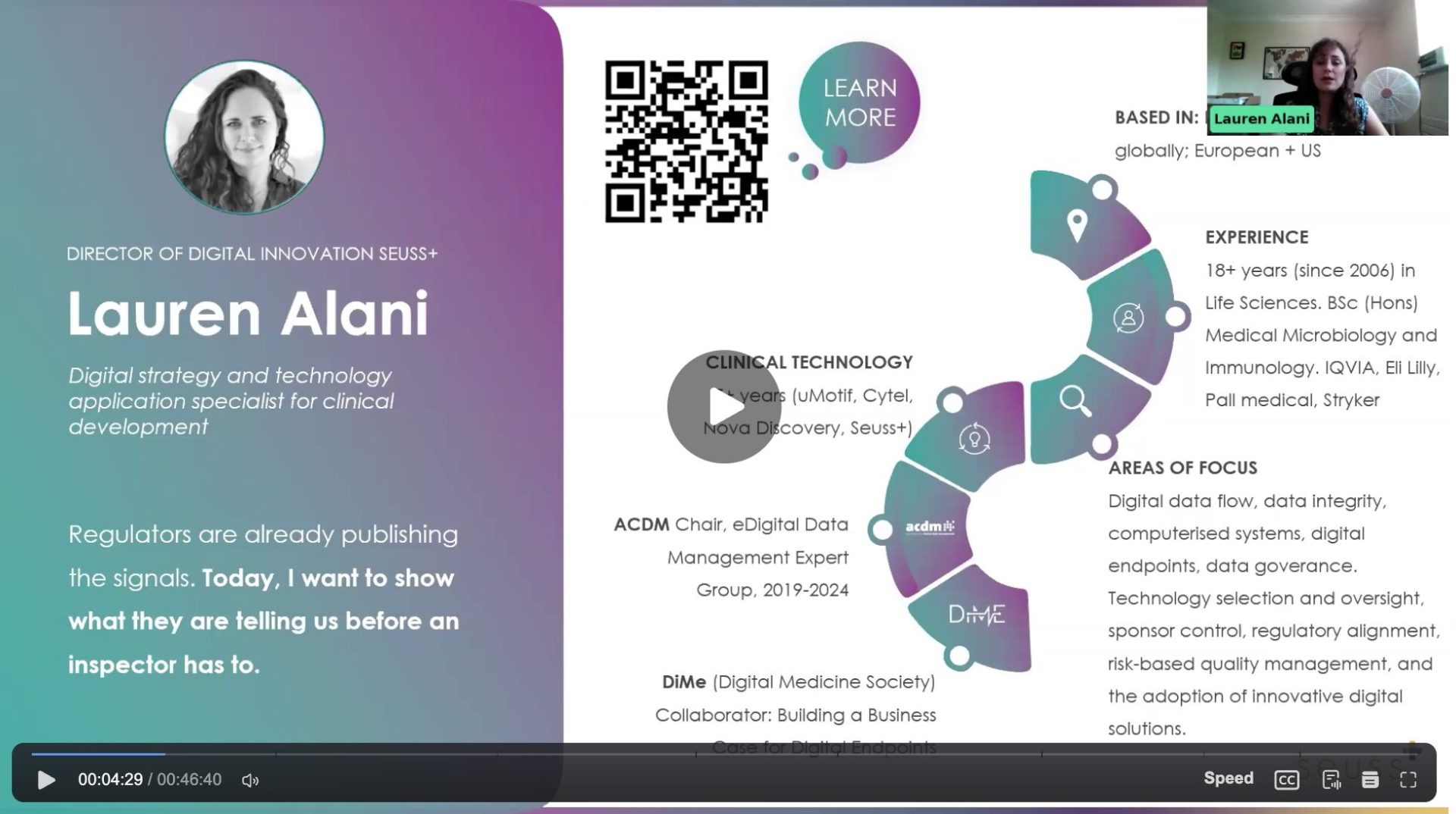
What Warning Letters Are Already Telling You About Managing the Data Life Cycle – Lauren Alani – Seuss+
Bringing the GxP community together creates better conversations
One of the things I am most proud of about ArkFest is the diversity of perspectives it brings together. In the GxP track, clinical operations, quality, data management and technology specialists all approached information from different angles, yet the conversations repeatedly converged on the same principles.
Whether the discussion centred on clinical operations, data retention, cybersecurity or AI, the underlying message was remarkably consistent: organisations need trusted information, designed for longevity, built on standards and managed throughout its lifecycle.
That, for me, is what makes ArkFest a great conference. It creates opportunities for different disciplines to learn from one another, challenge assumptions and collectively shape the future of data management.
Looking ahead
Reflecting on ArkFest 2026, I am incredibly proud of what we have built together.
This event would not be possible without the enthusiasm and generosity of our customers, partners and guest speakers, who continue to share their expertise and help move our industries forward. On behalf of everyone at Arkivum, thank you for making this our biggest and most successful ArkFest yet.
We are already looking ahead to ArkFest 2027, where we will once again bring together our customers, partners and wider community to explore the ideas, innovations and collaborations shaping the future of trusted information management.
I hope you will join us.
Pre-register for ArkFest 2027, here:

Chris Sigley
Chris is the Chief Executive Officer at Arkivum. He joined the business in June 2020 to drive further growth across the business, both by capitalising on its established client base in higher education, culture and heritage and by gaining wider traction in sectors such as life sciences and pharmaceuticals, corporate, and scientific research.
Get in touch
Interested in finding out more? Click the link below to arrange a time with one of our experienced team members.
Book a demo